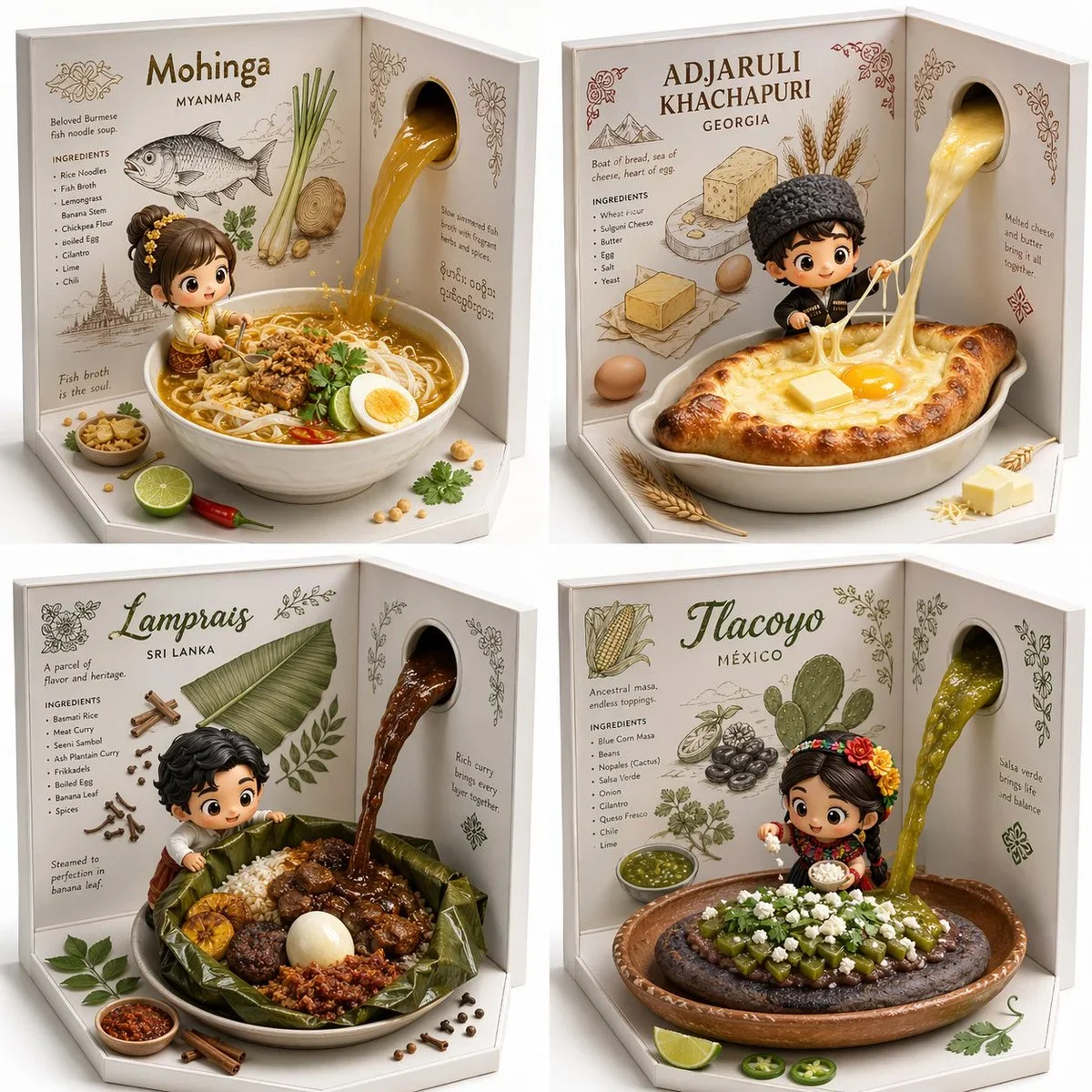
The prompt

The prompt emphasizes freshness, serving context, camera angle, and natural surface detail to avoid waxy or over-styled results. Its strongest visual cues are architecture.

image prompt
2x2 grid, do this for 4 famous cuisines: function dish(AA){ <instruction> Input A is a Famous Dish / Culinary Tradition / Signature Dessert / Regional Specialty. Analyze: - ingredient hierarchy, cooking method, plating logic - origin region, historical story, ritual or social context - flavor architecture translated into visual composition - symbolic ingredients, cookware, and dining environment - chef or tradition lineage Goal: A "sauce pour environment." A giant ladle, piping bag, or sauce boat is pouring the primary sauce, cream, glaze, broth, or puree onto a table. The flowing edible medium rises into a detailed 3D world of the dish: ingredients, preparation stages, origin landscape, and plated final form merging together. Rules: - the poured substance must remain recognizably edible while forming the scene - include knives, cutting board, handwritten recipe notes, ingredient trays, steam, spice dust, region-appropriate tools - include a tiny chef or grandmother figure preparing a miniature version nearby - include a food critic headline, market receipt, or origin-story clipping - semantically infer cuisine-specific vessels, table culture, garnish logic, and environment - no random food pile; composition must reveal flavor structure and culinary history - lighting: appetizing natural kitchen light with rich edible texture Output: ONE image, 4:5, culinary-process diorama aesthetic </instruction> Output: 2x2 grid, each grid with a different dish(AA) output } Art direction controls: {{lighting}}, {{surface}}, {{mood}}.

Tune the prompt, not the plumbing.

Every control comes from this prompt’s content schema. Changes stay in your browser and update instantly.

Lighting
Surface
Mood
Customized prompt1599 characters
2x2 grid, do this for 4 famous cuisines: function dish(AA){ <instruction> Input A is a Famous Dish / Culinary Tradition / Signature Dessert / Regional Specialty. Analyze: - ingredient hierarchy, cooking method, plating logic - origin region, historical story, ritual or social context - flavor architecture translated into visual composition - symbolic ingredients, cookware, and dining environment - chef or tradition lineage Goal: A "sauce pour environment." A giant ladle, piping bag, or sauce boat is pouring the primary sauce, cream, glaze, broth, or puree onto a table. The flowing edible medium rises into a detailed 3D world of the dish: ingredients, preparation stages, origin landscape, and plated final form merging together. Rules: - the poured substance must remain recognizably edible while forming the scene - include knives, cutting board, handwritten recipe notes, ingredient trays, steam, spice dust, region-appropriate tools - include a tiny chef or grandmother figure preparing a miniature version nearby - include a food critic headline, market receipt, or origin-story clipping - semantically infer cuisine-specific vessels, table culture, garnish logic, and environment - no random food pile; composition must reveal flavor structure and culinary history - lighting: appetizing natural kitchen light with rich edible texture Output: ONE image, 4:5, culinary-process diorama aesthetic </instruction> Output: 2x2 grid, each grid with a different dish(AA) output } Art direction controls: soft directional studio light, black stone with subtle texture, quiet and editorial.

Useful structure, room to move.

The prompt emphasizes freshness, serving context, camera angle, and natural surface detail to avoid waxy or over-styled results. Its strongest visual cues are architecture.

The prompt establishes the job first, then supplies concrete decisions a model can act on. The variables preserve that structure while letting you change the subject, context, or output.

2X2 Grid Artwork — Landscape — image prompt preview